
Claim Broken Ankle Compensation with Expert Ankle Injury Solicitors
Suffering a broken ankle can be a life-changing experience, particularly when it results from a violent incident or serious accident. The pain, reduced mobility, and emotional distress caused by an ankle injury can impact every area of daily life. In addition to physical suffering, you may face long periods off work, the need for ongoing treatment, and mounting financial pressure. Everyday tasks such as driving, climbing stairs, or even walking short distances can become challenging. If your injury occurred in England, Scotland, or Wales and was not your fault, you may be entitled to make an ankle injury claim.
Compensation for a broken ankle can provide crucial support to cover medical bills, therapy costs, lost income, and other related expenses. It may also include reimbursement for mobility aids, adjustments to your home, and any out-of-pocket costs linked to your recovery. Whether you are seeking broken ankle compensation, exploring ankle injury claims, or need guidance on ankle fracture compensation amounts, it’s important to understand your rights. In this first part of our guide, we’ll explore who can claim, how ankle injury compensation works, and what to consider when starting a claim for compensation for broken ankle injuries.
Fractured Ankle Injuries and Common Causes: What Leads to a Broken Ankle Claim?
A fractured or broken ankle is a serious injury that often results from high-impact trauma. This type of ankle injury may involve broken bones in the ankle joint such as the tibia, fibula, or talus and can sometimes result in a dislocated ankle. Victims often experience severe pain, joint instability, and limited mobility, requiring surgery, immobilization, and long-term rehabilitation. Many people seek broken ankle compensation after such injuries, especially if they result from criminal acts or accidents. If your broken ankle injury occurred in England, Scotland, or Wales and the cause of the injury was not your fault, particularly if it was the result of a violent crime then you may be eligible to make a broken ankle compensation claim through the Criminal Injuries Compensation Authority (CICA). If your ankle injury has affected your ability to work, you can also claim for lost earnings and even future loss of income. Common causes of dislocated and fractured ankle injuries:
If you’re considering making an ankle injury compensation claim or want to understand whether you qualify for a broken ankle claim in the UK, it’s important to understand how these injuries most commonly occur particularly in violent or criminal circumstances. Typical causes include:
- Physical assaults: Kicks, punches, or attacks with weapons can easily cause fractured or dislocated ankles. Victims of such assaults often pursue CICA claims for broken ankle compensation.
- Robberies or muggings: Attackers may use force to steal possessions, knocking victims down and causing severe ankle fractures or dislocations, making the injured person eligible for an ankle injury claim.
- Hit-and-run incidents: Reckless drivers who intentionally strike pedestrians can cause significant ankle injuries. If you were injured in a hit-and-run and reported the crime to police, you may qualify for broken ankle compensation through CICA or also can start a personal injury claim.
- Domestic violence: Repeated or isolated acts of domestic abuse frequently lead to lower limb injuries, including fractured or dislocated ankles. These victims may be eligible for broken ankle compensation.
- Gang-related violence: Fights, weapon use, or forced falls in gang-related incidents are a common cause of serious ankle injuries and subsequent broken ankle compensation claims.
- Unprovoked street attacks: Random assaults, such as being kicked or stomped, can result in severe ankle injuries, qualifying victims can make compensation for broken ankle or broken ankle compensation.
- Armed assaults: The use of weapons—such as bats or blunt objects—can cause serious fractures and joint dislocations, which often lead to ankle injury and you can make claim for such injuries.
- Violence in public places: Incidents in nightclubs, bars, or other crowded venues can result in aggressive attacks and significant ankle injuries, making victims eligible for a broken ankle compensation claim.
If you’ve suffered a fractured or broken ankle in any of these circumstances, you may be entitled to claim compensation for broken ankle. You can contact our specialist broken ankle compensation solicitors for expert advice on starting your ankle injury claim and securing the compensation you deserve.
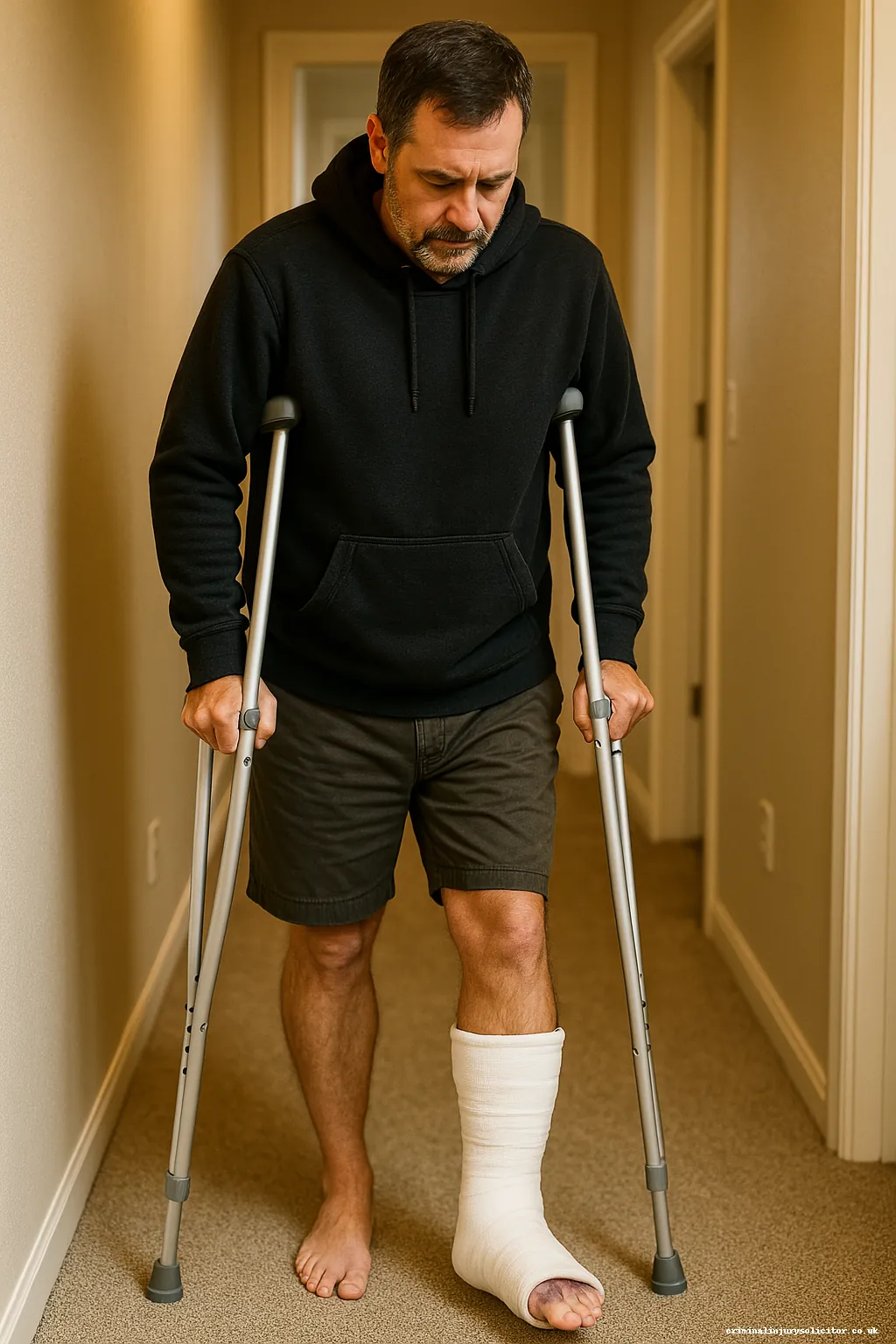
Are You Eligible to Make a Broken Ankle Compensation Claim?
If you have suffered a fractured ankle or broken ankle injury as a result of a violent crime, you may be entitled to claim compensation through the Criminal Injuries Compensation Authority (CICA). This government scheme is designed to provide financial support to victims of crime who have sustained physical or psychological injuries. Understanding the eligibility criteria is crucial before starting your broken ankle compensation claim or ankle injury claim UK. To qualify for broken ankle compensation or ankle injury compensation through CICA, you must meet the following requirements:

- Injury must result from a violent crime: Your broken or fractured ankle must be directly caused by a criminal act, such as an assault or violent incident.
- Incident must be reported to the police: You are required to report the crime to the police promptly and cooperate fully with any investigation.
- Claim must be filed within two years: CICA applications must generally be submitted within two years of the incident date, unless there are exceptional circumstances.
- Medical evidence is required: You must provide medical evidence—such as hospital records, GP notes, or specialist assessments—to confirm your injury and its impact.
- No involvement in illegal activity: If you were involved in illegal activity or provoked the incident, your ankle injury claim may be refused or reduced.
- Residency requirements: You must be a resident of the UK or a qualifying national to be eligible for ankle injury compensation UK.
- Unspent criminal convictions: If you have unspent criminal convictions at the time of your claim, CICA may reduce or refuse your broken ankle compensation depending on the severity of the offense. Minor offenses may not affect your claim, but more serious convictions can disqualify you entirely.
Even if the assailant has not been identified or convicted, you may still be able to make a broken ankle claim through CICA. The scheme does not require the offender to be known, but there must be sufficient evidence from the police to show that a violent crime occurred.
If you have questions about your eligibility or need help with your ankle injury claim, our solicitors can provide expert advice and support to maximise your compensation.
Understanding a Fractured Ankle and Different Types of Ankle Injuries
A fractured or broken ankle occurs when one or more of the bones that form the ankle joint are broken as a result of trauma. The ankle is a complex and vital joint, responsible for supporting the body’s weight and enabling movement. It consists of three main bones: the tibia (or shinbone), which bears most of the body’s weight; the fibula, which runs alongside the tibia and provides stability; and the talus, which sits between the bones of the leg and the foot, allowing the foot to move up and down.
An ankle fracture can vary greatly in severity. Some fractures may involve just a small crack in one of the bones, while others can include multiple breaks or even cause the ankle joint to become unstable or dislocated. The extent of the injury will influence the required medical treatment, the likely duration of recovery, and whether there are any long-term effects on movement or mobility. More complex fractures may require surgical intervention and extensive rehabilitation, while less severe breaks might heal with rest, a cast, or a brace.
Ankle injuries can range from mild conditions that resolve quickly to serious injuries requiring surgery and long-term recovery. The most common types of ankle injuries can be grouped by their severity:
(A) Severe Ankle Injuries:
Severe injuries to the ankle often have a substantial impact on daily life and may need surgical treatment to restore function and stability. These include:
- Displaced Fracture: This occurs when the broken bone fragments are out of alignment. Surgical procedures are usually necessary to realign and fix the bones in place using hardware like screws, plates, or rods. Displaced fractures often cause significant pain, swelling, and inability to bear weight on the affected foot.
- Open (Compound) Fracture: In this type of injury, the broken bone punctures through the skin, creating an open wound. There is a heightened risk of infection, and immediate surgery is required to clean the wound and stabilize the fracture.
- Trimalleolar Fracture: This is a serious injury involving breaks in all three ankle bones—the medial malleolus, lateral malleolus, and posterior malleolus. Trimalleolar fractures almost always require surgery and are often followed by an extended period of immobilization and rehabilitation.
- Bimalleolar Fracture: Involves fractures of two of the main bones on either side of the ankle. This kind of injury significantly impacts stability and generally requires surgical repair.
- Fracture-Dislocation: This occurs when there are both fractures and a dislocation of the ankle joint. This type of injury is complex, often causing severe pain, deformity, and damage to surrounding ligaments. Emergency surgery is typically necessary.


(B) Moderate Ankle Injuries:
Moderate injuries, while still painful and potentially debilitating, may heal with conservative management and do not always require surgery:
- Non-Displaced Fracture: The bone is cracked but remains properly aligned. These fractures may be managed with immobilization in a cast or boot, and most people can expect a full recovery with time and physical therapy.
- Hairline (Stress) Fracture: A small, thin crack in the bone that usually develops over time due to repetitive stress or overuse. These fractures are common in athletes and active individuals. Treatment typically involves rest, ice, and a gradual return to activity.
- Severe Ankle Sprain: Although not a bone injury, a severe sprain involves tearing of the ligaments around the ankle. The symptoms often resemble those of a fracture, including swelling, bruising, and difficulty walking. Some severe sprains can lead to chronic ankle instability if not treated properly.
(C) Mild Ankle Injuries:
Mild ankle injuries are much more common and tend to resolve quickly with appropriate care:
- Minor Ankle Sprain: This is a stretching or slight tearing of the ligaments, resulting in pain, swelling, and sometimes bruising. Most minor sprains improve within a few days to weeks with rest, ice, compression, and elevation.
- Bruised Ankle (Bone Contusion): This is an injury to the bone that does not involve a break but can still cause significant pain, tenderness, and swelling.
- Tendonitis: Inflammation of the tendons around the ankle can develop from repetitive strain or overuse. It can lead to pain, swelling, and limited movement, but usually improves with rest and anti-inflammatory treatments.
How Much Broken Ankle Compensation Can You Claim in the UK?
Our cica claim calculator in the main menu will help you with estimating the potential compensation that may be paid in respect to your claim. However, be aware that figures do vary considerably depending upon the nature (severity) of the injury and the impact on your daily life, period of suffering and whether any mental harm has been caused.
CICA compensation amounts depend on the severity of the injury. Based on CICA’s 2012 tariff system (Annex E), a fractured and dislocated ankle can fall into different compensation categories:
CICA Broken Ankle Compensation Payout Amount
| Type of Ankle Injury | Compensation Amount |
|---|---|
| Broken ankle with substantial recovery | £2,400 |
| One broken ankle with continuing significant disability | £11,000 |
| Both broken ankles with substantial recovery | £6,200 |
| Both ankles with continuing significant disability | £16,500 |
| Sprained one ankle, disabling for more than 13 weeks | £1,000 |
| Sprained both ankles, disabling for 13 weeks or more | £1,800 |
Additional Compensation for Ankle Injuries
- Multiple serious injuries: If your ankle fracture is one of several injuries sustained, the CICA calculates compensation using a formula—your most serious injury is compensated at 100% of the tariff, with secondary injuries at a reduced rate.
- Loss of earnings: If your broken ankle injury has prevented you from working for more than 28 weeks, you may be able to claim extra ankle injury compensation for lost income.
- Special expenses: You may also be entitled to compensation for medical bills, rehabilitation costs, mobility aids, or necessary home or vehicle adaptations due to your ankle injury.
Start Your Broken Ankle Claim Today
To find out how much broken ankle compensation you could be entitled to, speak with our specialist ankle injury solicitors UK. We offer free initial consultations and can guide you through every step of your broken ankle claim for the best possible payout.
If you are unsure about your eligibility or want to maximise your broken ankle compensation in the UK, contact our expert ankle injury claim solicitors for free advice and support with your claim.
Frequently Asked Questions (FAQs) For Broken Ankle Compensation
What qualifies for a broken ankle compensation claim under the CICA Scheme?
A broken ankle compensation claim under the Criminal Injuries Compensation Authority (CICA) Scheme is available to anyone in the UK who has suffered a broken or fractured ankle as a direct result of a violent crime or assault. For your injury to qualify for ankle injury compensation, it must have been caused by someone else’s intentional act of violence, such as being attacked, mugged, assaulted, or harmed during a criminal incident. This includes workplace assaults, street attacks, or any scenario where you were not at fault.
Unlike standard personal injury or accident claims, a broken ankle claim through the CICA does not require the offender to have been caught or convicted, but the incident must be promptly reported to the police. Your eligibility for compensation for broken ankle hinges on police involvement and clear evidence linking your injury to the crime. The CICA also covers injuries caused by criminal negligence, such as reckless driving with intent, making this route suitable for many types of ankle fracture claims.
A detailed police report, hospital records, and statements from witnesses are essential to support your application. You do not need to take legal action against the perpetrator directly. If your ankle injury claim UK is approved, the CICA will assess your case based on the severity, impact on daily life, and long-term prognosis, offering a fair broken ankle payout amount based on strict tariffs. Consulting broken ankle solicitors or ankle injury claim solicitors can significantly improve your chance of a successful claim, especially if your injury has led to ongoing disability or loss of earnings.
How is compensation determined for a broken ankle injury?
Compensation for broken ankle injuries under the CICA Scheme is carefully calculated to reflect both the physical and emotional toll of your injury. The payout depends on a structured tariff system set by the government, which categorizes injuries by type and severity. For a broken ankle compensation UK claim, the CICA considers:
- Whether your recovery was substantial or if you are left with lasting disability,
- If one or both ankles were injured,
- The need for surgery, rehabilitation, or ongoing medical care,
- The impact on your ability to walk, work, or perform daily activities,
- Any psychological trauma associated with the incident.
For example, if you experience a substantial recovery from a single broken ankle, the standard payout is £2,400. If you suffer continuing significant disability (chronic pain, limited mobility, or permanent limp), the payout increases to £11,000 for one ankle. If both ankles are affected, amounts rise to £6,200 for substantial recovery and £16,500 for ongoing disability.
The ankle injury compensation amount also factors in work-related consequences. If your broken ankle occurred at work due to a violent act, your work injury ankle compensation claim may include loss of income, future reduced earning potential, and support for retraining or mobility aids. Documenting the extent of your injury with medical notes, physiotherapy reports, and occupational health assessments is crucial for maximizing your ankle injury payout. For complex cases, it’s advisable to engage broken ankle claim solicitors to ensure your ankle fracture compensation UK claim is fully and accurately presented, especially if your injury has led to life-changing restrictions.
Can I claim if my broken ankle was caused by a criminal act?
Absolutely, if your broken or fractured ankle resulted directly from a criminal act, you have strong grounds for an ankle injury claim UK via the CICA. This can include being attacked, assaulted, struck by a vehicle in a deliberate hit-and-run, or injured during a burglary or mugging. Any scenario where your ankle fracture claim is due to another party’s intentional wrongdoing or criminal behaviour is valid for compensation for broken ankle under the scheme.
The CICA’s process is victim-focused: even if the person responsible has not been caught, charged, or convicted, you are still eligible to claim. You must report the crime to the police without delay and fully cooperate with any investigation. Providing prompt and thorough documentation, such as your police incident number, hospital x-rays, doctor’s notes, and witness details, greatly strengthens your application.
Many victims worry they can’t claim because there was no arrest or trial. This is a misconception. The CICA awards broken ankle compensation on the balance of probabilities. As long as you can show it is more likely than not that your injury was caused by a criminal act, your ankle injury claim solicitors can help you obtain the payout you deserve. This applies equally for injuries in public places, at work (compensation broken ankle work), or during work duties (broken ankle work injury claim).
What is the difference between a broken ankle and a sprained ankle claim?
The difference between a broken ankle claim and a sprained ankle claim mainly comes down to the injury’s severity and the CICA’s tariff levels. A fractured ankle compensation claim involves a break or fracture to one or more of the bones forming the ankle joint (tibia, fibula, or talus). This usually requires medical intervention such as casting, surgery, or prolonged immobilization and often has a longer recovery timeline.
A sprained ankle claim, on the other hand, involves stretched or torn ligaments. The CICA does recognize severe sprains especially those disabling you for 13 weeks or more. However, the broken ankle payout amount is much higher, reflecting the increased pain, rehabilitation, time off work, and risk of permanent damage.
When you submit your ankle injury compensation application, you’ll need clear medical evidence. Hospital records, GP notes, physiotherapy reports, and x-rays are critical. For complex fractures or ongoing issues, consult ankle injury solicitors UK who can advise on maximizing your ankle injury compensation amount and ensuring every aspect of your injury and recovery is documented for a stronger ankle fracture claim.
How long do I have to make a broken ankle compensation claim?
The general time limit for making a broken ankle compensation claim under the CICA Scheme is two years from the date the incident was reported to the police. This applies to all types of ankle injury claim UK cases, including those sustained in a violent attack, at work (work accident ankle injury), or any other criminal circumstance.
However, the CICA does allow for some exceptions particularly where the applicant can demonstrate that it was not reasonably possible to apply sooner due to physical or psychological trauma, ongoing treatment, or other serious reasons. For instance, if you were hospitalized for months or suffered PTSD after the attack, this can be a valid ground for a late claim.
It’s crucial to act as soon as you’re able. The sooner you instruct broken ankle solicitors or start your claim, the easier it is to gather evidence and prove the impact on your daily life and employment. If you miss the deadline, you may still apply but should include a detailed letter explaining the delay, ideally supported by medical or psychological evidence. A specialist in broken ankle compensation solicitors or ankle injury claim solicitors can improve your chances of a successful late claim.
How much compensation can I get for a broken ankle?
Compensation for a broken ankle varies depending on the severity of the fracture, the number of ankles involved, and your long-term outcome. The CICA’s fixed broken ankle payout amounts are:
- £2,400 for one broken ankle with substantial recovery,
- £6,200 for both ankles with substantial recovery,
- £11,000 for one broken ankle with continuing significant disability,
- £16,500 for both ankles with ongoing significant disability.
These figures are designed to reflect the pain, suffering, and life impact of your ankle injury compensation. If your injury leads to long-term mobility issues, inability to return to your previous work, or permanent limp, you are eligible for the higher payout levels. Additional factors like loss of earnings, changes to your lifestyle, and the need for ongoing medical support can influence the final amount in complex cases.
To get the highest possible ankle injury payout, keep detailed records of all your medical appointments, prescriptions, time off work, and any home adjustments or mobility aids you require. Submitting this information with your claim or via your broken ankle claim solicitors helps ensure the CICA accurately assesses your case and awards the maximum ankle injury compensation amount. If your injury was work-related, mention this for a work injury ankle compensation claim.
Can I claim if my ankle injury is not a result of a violent crime?
Claims for broken ankle compensation under the CICA Scheme are only valid if your injury was caused by a crime of violence. If your ankle was broken or fractured due to a slip, trip, fall, sports injury, or non-criminal road traffic accident, you will not be able to claim compensation from the CICA. Instead, you should explore other legal options for an ankle injury claim in the UK, such as a personal injury claim against the responsible party or through an employer’s liability insurance if the accident happened at work.
It’s important to understand the difference: the CICA route is specifically designed for victims of crime, including assaults, attacks, muggings, or being caught up in a violent incident. If you suffered a broken ankle during a violent robbery, street attack, or as part of a work accident involving criminal behavior, you may be eligible for compensation for a broken ankle through the CICA.
For other causes of ankle injuries not related to criminal actions, working with ankle injury solicitors in the UK can help you pursue compensation through civil courts. These solicitors can help establish who was at fault, gather medical evidence, and negotiate a fair broken ankle payout amount. If you’re unsure which route to take for your ankle injury compensation claim, it’s best to speak with a specialist who understands both criminal injury and personal injury claims.
What types of injuries qualify as a broken ankle under the CICA Scheme?
For a broken ankle claim to qualify under the CICA Scheme, your injury must involve a medically confirmed fracture of one or more of the bones forming the ankle joint, typically the tibia, fibula, or talus. This could range from a simple crack to a complex, multiple-bone break, or even an open (compound) fracture. The CICA also considers the severity of the injury and whether it caused permanent or significant disability, as this will affect your ankle injury compensation amount.
Other qualifying injuries can include serious ligament or tendon damage if directly associated with a fracture, as well as injuries that required surgical intervention (such as the insertion of pins, plates, or screws), prolonged immobilization in a cast, or extensive physiotherapy. The injury must be serious enough to have impacted your daily life, your ability to work, and your overall well-being.
If you experienced a work accident ankle injury caused by violence or criminal behavior, such as being assaulted by a coworker or attacked during your duties, this also qualifies for a broken ankle work injury claim. Documenting the injury with x-rays, consultant letters, GP notes, and details of any ongoing pain or disability is essential for securing the correct compensation for ankle injury in the UK. If you’re uncertain about your eligibility, ankle injury claim solicitors can review your records and advise on the likelihood of success for your broken ankle accident claim.
What is the process for making a broken ankle compensation claim?
To start a broken ankle compensation claim under the CICA Scheme, the most crucial step is to report the crime to the police as soon as possible. The police report is the foundation of your claim. It’s essential for proving your injury resulted from a criminal act. After reporting, collect all relevant medical evidence, including hospital discharge notes, x-rays, GP records, and any physiotherapy or rehabilitation reports. These documents will demonstrate the nature and extent of your ankle fracture claim.
You can submit your claim directly through the CICA’s online portal or by post. Many victims choose to work with broken ankle claim solicitors or ankle injury claim solicitors for expert support, ensuring the strongest possible application and helping you avoid common pitfalls or missed evidence. Your solicitor will guide you on gathering witness statements, photos of your injury, or CCTV footage if available.
The CICA will review your claim, assess your evidence, and may request additional details. Processing times can vary from several months to over a year, depending on the case’s complexity and whether further medical reports are needed. Throughout the process, keeping a diary of symptoms, treatments, and any work missed can help strengthen your claim and maximise your broken ankle payout amount.
Can I claim if the attacker was never caught or convicted?
Yes, you can make a successful ankle injury compensation claim with the CICA even if the attacker responsible for your broken ankle was never caught, identified, or convicted. The key requirement is that the crime was reported to the police, and you cooperated fully with any investigations. The CICA does not require a criminal conviction for a broken ankle compensation claim to succeed; decisions are based on the balance of probabilities.
What matters most is credible evidence. This includes your police crime reference number, medical documentation confirming the ankle fracture, and any supporting witness statements. If you were injured at work in a violent incident, include your employer’s accident records or health and safety reports as well. Ankle injury compensation solicitors can help collect and present this evidence in a clear, convincing manner.
Even if the circumstances around your attack remain unresolved, you may still be entitled to a broken ankle payout. Many successful claims are made each year by victims who do not know the identity of their attacker, or where no one was prosecuted. Your claim’s success will depend on the strength of your evidence and how well your case is presented, so working with broken ankle solicitors or ankle fracture compensation experts can improve your chances of a positive result.
Are there specific compensation amounts for broken ankle injuries?
The CICA has fixed tariff bands for broken ankle compensation in the UK, making it easier for victims to understand what they might be entitled to. The amount of compensation for a broken ankle depends on the severity of your injury and whether you have made a substantial recovery or are left with significant, ongoing disability.
If you suffered a broken ankle with substantial recovery (meaning you have regained most of your previous mobility and function), you can expect an award of £2,400 for one ankle or £6,200 if both ankles were broken. For a broken ankle that has led to continuing significant disability (such as chronic pain, instability, loss of movement, or the need for ongoing support), the compensation rises to £11,000 for one ankle and up to £16,500 for both ankles.
In addition, if you experienced a disabling ankle sprain lasting over 13 weeks, the CICA will award £1,000 for one ankle or £1,800 for both. These compensation bands reflect not just your physical suffering but the long-term impact on your working life, daily activities, and overall well-being. For more complex cases especially where a work accident ankle injury or fractured ankle compensation is being pursued consulting broken ankle compensation solicitors or ankle injury claim solicitors can help ensure you receive the highest payout possible.
How do I prove that my ankle injury was caused by a violent crime?
Proving your ankle injury was the direct result of a violent crime is critical to a successful broken ankle compensation claim. First, you must have reported the incident to the police and obtained a crime reference number. The CICA will require details from the police report, so ensure you have a clear, consistent account of what happened.
Next, gather comprehensive medical evidence. This includes emergency department records, consultant letters, radiology (x-ray or CT scan) reports showing the fracture, discharge summaries, and physiotherapy notes. Witness statements, if available, are highly valuable, especially if someone saw the attack or the immediate aftermath. If your injury happened at work, include your employer’s accident log and any occupational health assessments for your work injury ankle compensation claim.
Photos of your injury, medical devices (casts, boots, or supports), and evidence of missed work or loss of income can further support your case. Ankle injury solicitors in the UK often help victims compile these materials and draft a comprehensive, persuasive submission for the CICA. The stronger your evidence, the greater your chance of a successful broken ankle claim and a fair payout.
Can I make a broken ankle compensation claim if my injury happened abroad?
If you suffered a broken ankle due to a violent crime while travelling or working abroad, the standard CICA scheme may not apply, as it is designed for injuries sustained in England, Scotland, or Wales. However, if you are a UK resident and your ankle injury occurred overseas, there may still be options for pursuing compensation for a broken ankle, depending on the country, the nature of the crime, and any reciprocal agreements in place.
Some countries have their own criminal injuries compensation schemes, and you may be able to pursue an ankle injury claim in the country where the incident occurred. If you were working abroad as part of your UK employment and your injury was due to a violent act in the course of your work, you might have a work injury ankle compensation claim through your UK employer’s insurance. Additionally, travel insurance policies may provide some coverage for medical costs and lost earnings in these circumstances.
If you’re not sure which scheme or route applies, broken ankle solicitors or specialist ankle injury claim solicitors can advise on your options and guide you through the process of seeking ankle fracture compensation in the UK or internationally. Documentation such as police reports from the foreign jurisdiction, embassy records, and local medical evidence will strengthen your case and improve your chances of a successful broken ankle payout.
What happens if I delayed reporting my broken ankle injury to the police?
Timely reporting is crucial for a successful broken ankle compensation claim under the CICA scheme. Generally, you must report the crime to the police as soon as possible after the incident. Delays can raise questions about the validity of your claim, as the CICA relies on police records to confirm that your ankle injury resulted from a violent crime.
However, the CICA does recognise that in some cases, trauma, shock, medical emergencies, or personal circumstances can cause victims to delay contacting the police. If you delayed reporting your broken ankle accident claim, you should provide a detailed written explanation for the delay, supported by any available medical or psychological evidence (such as hospital admission notes or GP letters indicating you were physically or emotionally unable to report immediately).
If you were hospitalised, unconscious, or unable to report the injury due to mental health issues following the attack, these are considered reasonable grounds for delay. It’s especially important in cases of work accident ankle injury claims, where reporting protocols may differ between employers and police. Always keep records of your communications and provide these to your ankle injury claim solicitors or broken ankle solicitors UK when making your claim. Acting quickly, once you’re able, and providing as much detail as possible will increase your chance of a successful compensation for ankle injury UK.
Can I claim additional compensation if my broken ankle injury led to permanent disability or loss of earnings?
Yes, if your broken ankle has caused permanent disability, chronic pain, or long-term loss of earnings, you may be eligible for a higher broken ankle payout amount. The CICA tariff provides increased awards for continuing significant disability, reflecting the severe impact a fractured ankle can have on your mobility, independence, and working life. Permanent loss of function, the need for walking aids, or ongoing reliance on medical care can all justify a higher compensation for broken ankle.
In addition to the basic award, you may claim for special expenses and loss of earnings if your broken ankle injury stopped you from working for a prolonged period (usually more than 28 weeks). This includes lost wages, reduced future earning potential, retraining costs, and adaptations required for your home or vehicle. If you need to hire help or purchase equipment because of your injury, keep all receipts and documentation for your ankle injury compensation claim.
Ankle injury claim solicitors or broken ankle compensation solicitors can help you assemble a comprehensive claim, including evidence from occupational health assessments, medical specialists, and financial records. They can also advise on appealing if you believe your initial broken ankle compensation UK award was too low given the impact on your life and career. This approach is especially valuable for claimants making a broken ankle work injury claim or anyone facing permanent changes due to their injury.
Can I claim broken ankle compensation if I have previous injuries or a medical history of ankle problems?
It is possible to claim ankle injury compensation even if you have a history of previous ankle injuries or underlying medical conditions, provided that your new broken ankle was directly caused by a violent crime. The CICA will assess the evidence to determine whether the criminal incident aggravated an existing condition or resulted in a new and distinct injury.
If you can clearly demonstrate, through medical records and x-rays, that the latest ankle fracture or worsening of your condition was a direct result of the assault or criminal act, your claim is likely to succeed. However, if your broken ankle claim is complicated by an existing medical history, the CICA may adjust the payout to reflect the proportion of your symptoms directly linked to the recent crime.
To maximise your compensation for a broken ankle, it’s essential to supply comprehensive before-and-after medical evidence. Solicitors specialising in ankle fracture compensation UK or broken ankle accident claim cases can help you build a clear timeline of your injuries and show how the violent event made your condition worse or caused additional damage. Even with pre-existing conditions, you are still entitled to claim the portion of compensation directly related to the criminal act.
Can I get compensation for both pain and psychological trauma after a broken ankle?
Yes, the CICA recognises that victims of violent crime often experience not only physical injuries but also significant psychological trauma. When making your broken ankle compensation claim, you can include evidence of emotional distress, anxiety, depression, or post-traumatic stress disorder (PTSD) caused by the incident and your injury. This is especially relevant if your ankle fracture claim has led to ongoing fears, a loss of confidence, or changes in your ability to work or participate in everyday activities.
To support your claim for psychological injury, include letters from your GP, referrals to mental health professionals, or formal diagnoses from psychiatrists or psychologists. The CICA can make separate or additional awards for confirmed psychological harm if it reaches a certain level of severity, particularly when it is a direct result of the crime and not solely a pre-existing condition.
Working with broken ankle solicitors or ankle injury compensation solicitors helps ensure your claim fully captures all the impacts of your injury. Not only does this maximise your broken ankle payout, but it also provides recognition for the invisible suffering and the real-life consequences of a violent crime. This approach is important in both personal and work-related ankle injury claim UK cases.
What support do broken ankle solicitors or ankle injury claim solicitors provide during my claim?
Choosing the right broken ankle solicitors or ankle injury claim solicitors in the UK can make a significant difference to your case. Specialist solicitors have in-depth knowledge of the CICA process, including what evidence is needed, how to present your case for the highest broken ankle payout amount, and how to appeal if your claim is rejected or undervalued. They will:
- Help you gather police reports, medical records, witness statements, and photographs,
- Advise you on documenting all aspects of your injury- physical, emotional, and financial,
- Calculate your likely compensation for broken ankle based on CICA tariffs and your unique circumstances,
- Represent you in dealings with the CICA, responding to requests for further information or clarification,
- Prepare and submit appeals if necessary, increasing your chance of a higher award,
- Explain your rights, deadlines, and the potential for special expenses or loss of earnings.
Most broken ankle claim solicitors or ankle fracture compensation specialists work on a “no win, no fee” basis, so you do not pay unless your claim succeeds. This removes the financial risk of seeking justice and ensures you receive the best representation possible. Their expertise is particularly helpful for complicated claims, such as broken ankle work injury claims, those involving psychological harm, or cases with delays or disputed evidence.
How long does it take to receive broken ankle compensation after making a claim?
The time it takes to receive your broken ankle compensation depends on the complexity of your case, the clarity of your evidence, and the current workload of the CICA. Most straightforward ankle injury compensation claims are resolved within 6 to 18 months, but cases involving severe injuries, ongoing disability, disputed circumstances, or additional claims for loss of earnings can take longer. The process generally follows these steps:
- Submission of your broken ankle claim, with police and medical evidence,
- Initial review and possible requests for additional information by the CICA,
- Medical assessment or requests for expert reports if necessary,
- A decision on your broken ankle payout amount,
- Payment of the compensation if your claim is successful.
Engaging experienced broken ankle solicitors or ankle injury claim solicitors UK can help keep your claim moving efficiently by ensuring all documentation is complete and correct from the start. If there are delays, your solicitor can chase progress or escalate issues on your behalf. While the wait can be frustrating, rest assured that all valid claims for compensation for broken ankle are eventually addressed, with backdated awards where appropriate. For more urgent needs, such as medical or living costs following a work accident ankle injury, discuss possible interim payments with your legal team.
Can I appeal if my broken ankle claim is rejected or the payout seems too low?
Yes, if your broken ankle compensation claim is rejected or you feel the ankle injury compensation amount awarded is too low, you have the right to appeal the decision. The first step is to request a formal review by the CICA, where you can submit new evidence, correct errors, or provide further clarification. If the review is still unsatisfactory, you can escalate the matter to an independent tribunal, where your case will be considered by an impartial panel.
Common reasons for appeals include disagreement about the severity of your broken ankle, disputes over the evidence, or overlooked impacts such as loss of earnings or psychological injury. Ankle injury solicitors UK or broken ankle claim solicitors are invaluable during the appeals process, helping to present your case in the strongest possible light, gather expert testimony, and ensure every aspect of your broken ankle claim is fully considered.
It’s important to act quickly, as there are strict deadlines for appeals (typically within 56 days of the original decision). With the right support, many claimants achieve a higher broken ankle payout amount on appeal. Don’t hesitate to seek legal help if you’re unhappy with the CICA’s initial outcome.
Can I claim broken ankle compensation if the injury happened at work?
Yes, if your broken ankle was caused by a violent incident or criminal act at work, you may be eligible for a broken ankle work injury claim through the CICA Scheme. Examples include assaults by colleagues, customers, patients, or intruders while performing your duties, or being caught up in workplace violence or robbery.
Work injury ankle compensation covers the same range of awards as other CICA claims, but your solicitor will also advise whether you should pursue a separate civil or personal injury claim against your employer. In some cases, both a CICA claim and a civil claim can be run in parallel, especially if your employer failed in their duty of care or if the criminal act was a result of unsafe working conditions.
Document your injury with workplace accident reports, witness statements, police reports, and medical records. If your injury has affected your ability to return to work or perform your normal duties, keep evidence of loss of earnings and any occupational health assessments. Ankle injury claim solicitors or broken ankle solicitor UK specialists are best placed to guide you through the complex landscape of work accident ankle injury claims and maximise your compensation for ankle injury UK.
What evidence do I need to support my broken ankle compensation claim?
The success of your broken ankle compensation claim depends largely on the quality and completeness of your evidence. Essential documents for your ankle fracture compensation claim include:
- Police crime reference number and a detailed police report,
- Medical records confirming the diagnosis, treatment, and prognosis of your broken ankle (including x-rays, discharge notes, surgery reports, and physiotherapy summaries),
- Photos of your injury, medical devices (casts, boots, supports), and any visible scars,
- Witness statements from anyone who saw the attack or its aftermath,
- Employer reports for work injury ankle compensation claims,
- Proof of loss of earnings, if your injury has prevented you from working,
- Evidence of psychological harm (GP letters, therapist or psychiatrist reports),
- Receipts for any out-of-pocket expenses directly related to your injury (travel, medication, mobility aids).
Our broken ankle compensation solicitors or ankle injury claim solicitors can help ensure you gather every relevant document and present your claim as persuasively as possible. The more complete your submission, the faster your broken ankle payout will be processed and the higher the chance of achieving the full amount of compensation for broken ankle you deserve.
Are there special rules for children or vulnerable adults making broken ankle claims?
Yes, the CICA Scheme has special provisions for children and vulnerable adults seeking broken ankle compensation. If the victim is under 18, a parent or guardian can make the ankle injury compensation claim on their behalf. The two-year time limit for claiming usually does not start until the child turns 18, giving plenty of time to pursue a broken ankle claim even if the injury occurred years earlier. For vulnerable adults, such as those lacking mental capacity, a suitable adult or appointed representative can make the claim for them.
The CICA is sensitive to the additional needs of children and vulnerable claimants, and compensation for broken ankle is awarded in line with adult claims, based on the severity of injury and long-term effects. If the payout is significant, the CICA may hold the funds in trust until the child reaches adulthood or make arrangements to protect the compensation for a vulnerable adult’s benefit.
If you are a parent, carer, or advocate, working with broken ankle solicitors or ankle injury claim solicitors UK ensures the process is handled with care and all evidence is correctly submitted. This is particularly important for claims involving school assaults, youth violence, or abuse in care settings.
Is there a fee for making a broken ankle compensation claim?
There is no fee for submitting a broken ankle compensation claim directly to the CICA, and the process is designed to be accessible to victims of violent crime. However, many people choose to work with ankle injury claim solicitors or broken ankle compensation solicitors to improve their chances of a successful claim, especially for complex or high-value cases.
Most solicitors offer a “no win, no fee” arrangement, meaning you only pay a percentage of your broken ankle payout if your claim is successful. It’s important to check the terms and conditions, as fees can vary and may include deductions for expenses incurred during the claim. For those making a broken ankle accident claim after a work incident, your union or professional body may offer free legal support.
While there is no charge to apply to the CICA, investing in professional legal help can pay dividends in securing the maximum compensation for broken ankle, navigating appeals, and ensuring no aspect of your claim is overlooked. Choose experienced broken ankle claim solicitors or ankle injury compensation specialists for peace of mind and the best results.
How can I maximise my chances of a successful broken ankle compensation claim?
To give yourself the best possible chance of a successful broken ankle compensation claim and the maximum payout, follow these tips:
- Report the crime to the police immediately and keep a record of your crime reference number,
- Seek medical attention right away and keep all records of your diagnosis and treatment,
- Gather witness statements and photographs to document your injury and the circumstances of the crime,
- Keep a diary of your symptoms, daily struggles, time off work, and any psychological impacts,
- Retain all receipts for expenses and evidence of loss of earnings,
- Work with specialist broken ankle solicitors or ankle injury claim solicitors UK who understand CICA claims,
- Respond quickly to any requests for further information from the CICA,
- Ensure every aspect of your injury, including pain, loss of mobility, psychological effects, and financial impact, is fully documented.
Staying organised, proactive, and supported by professionals will help you secure the highest compensation for broken ankle, whether your case involves a work injury, a public assault, or a complex medical history. Don’t hesitate to seek legal advice early-doing so can make a real difference in your final broken ankle payout amount and your recovery journey.
Long-Term Implications of Ankle Injuries
While most people recover from a broken ankle with appropriate treatment and rehabilitation, some individuals experience long-term complications that can significantly impact quality of life. Understanding these potential effects is crucial for anyone seeking compensation, as it can influence the amount and type of damages claimed.
Chronic Pain: It is not uncommon for individuals to suffer ongoing pain even after the bones have healed and mobility is restored. This chronic discomfort may be intermittent or constant, often aggravated by physical activity, weather changes, or prolonged standing. Chronic pain can interfere with work, hobbies, and daily tasks, sometimes requiring long-term pain management or specialist interventions.
Arthritis Development: A serious consequence of an ankle fracture is the increased risk of developing post-traumatic arthritis. This condition can occur months or even years after the original injury, as damage to cartilage or subtle misalignment leads to inflammation, stiffness, and joint pain. Arthritis in the ankle may result in reduced range of motion, persistent swelling, and can eventually necessitate surgical treatment such as joint fusion or replacement.
Mobility Issues: Even after successful treatment, some people experience lasting mobility problems. These may include a persistent limp, difficulty walking on uneven ground, or an inability to run or participate in certain sports. In more severe cases, the ankle may remain unstable or weak, increasing the risk of further injuries and affecting confidence in everyday activities. Such ongoing limitations can impact a person’s independence and overall well-being.
Why This Matters for Compensation: When seeking compensation for a broken ankle, it is essential to consider not only immediate losses but also potential future medical expenses, rehabilitation costs, and any required assistive devices. Ensuring these long-term implications are documented by medical professionals can make a substantial difference in the outcome of your claim.


Impact on Employment and Daily Life
A broken ankle can disrupt not just physical health, but also a person’s career and daily routines. The effect varies greatly depending on the nature of employment, lifestyle, and individual circumstances.
Manual Laborers: For those in physically demanding roles—such as construction workers, warehouse operatives, or delivery drivers—a broken ankle may mean months away from work. Even after the bone heals, ongoing weakness, pain, or reduced mobility can prevent a full return to previous duties, forcing some individuals to change careers or accept lower-paid, less physical work. Extended absence may also affect job security, bonuses, and career progression.
Office Workers: Although office-based employees may return to work sooner, they can still face challenges. Swelling or pain may make it difficult to sit for long periods, use stairs, or commute, particularly if public transport or walking is required. Many office environments are not fully accessible for those with limited mobility, so employers may need to make reasonable adjustments under the Equality Act 2010.
Self-Employed Individuals: The self-employed often face unique pressures, as time off work directly affects income and business reputation. Missed contracts, delays, or lost clients can have long-lasting financial consequences. Some self-employed professionals may also struggle to delegate work, leading to increased stress and difficulties maintaining their livelihood during recovery.
Real-Life Scenario: Consider the case of a self-employed builder who suffered a complex ankle fracture after being assaulted. Unable to work for over six months and with ongoing stiffness, he had to decline multiple projects, resulting in substantial financial loss. Even after returning to light duties, his capacity to work full-time remained limited, highlighting how ankle injuries can affect long-term earning potential.
By addressing the specific ways, a broken ankle can influence different professions and daily routines, compensation claims can be more accurately tailored to reflect the true impact of the injury.
Additional Losses You Can Claim
Loss of Earnings – If your injury caused you to be unable to work for more than 28 weeks, you may be eligible for compensation from the Criminal Injuries Compensation Authority (CICA) for lost earnings. To qualify, you must be able to demonstrate that you had a consistent and regular income before the injury. This could include proof of full-time employment, self-employment, or any other verifiable source of income. CICA will consider your pre-injury income levels to calculate the compensation. This can be especially crucial if the injury significantly impacted your financial stability and your ability to support yourself or your family.
Psychological Trauma – If your injury led to psychological trauma such as Post-Traumatic Stress Disorder (PTSD), depression, or anxiety, you may be entitled to additional compensation. These mental health conditions can have a long-term impact on your well-being, and CICA recognizes the importance of supporting victims of crime with emotional and psychological support. To qualify for compensation for psychological trauma, you will need to provide medical evidence of the diagnosis from a qualified mental health professional. The severity of your condition and the impact on your daily life will be taken into account when determining the amount of compensation.
Special Expenses – If your injury results in additional needs, such as mobility aids or home adaptations, CICA may compensate you for these “special expenses.” However, there is an important criterion: you must have been unable to work for at least 28 weeks as a result of your injury. This compensation is meant to help cover the costs of any special equipment or alterations to your living space that are necessary for you to maintain a reasonable quality of life after the injury. This can include items like wheelchairs, prosthetics, home modifications (such as ramps or stairlifts), or any other equipment that helps you with mobility or daily activities. The claim must be substantiated by proof of these expenses and how they relate to your injury.

The Importance of Pursuing a Broken Ankle Compensation Claim
Suffering a broken ankle is not only physically painful but can also disrupt every aspect of your life. For many people, an ankle injury results in a sudden loss of mobility, a lengthy recovery, and the inability to work or take part in day-to-day activities. The financial burden, emotional stress, and long-term consequences underscore why it is vital to pursue a broken ankle compensation claim, particularly if your injury occurred due to someone else’s negligence or a violent incident.
Covering Medical Expenses and Ongoing Care
One of the most immediate and overwhelming concerns following a broken ankle is the cost of medical treatment. From emergency room visits and X-rays to surgeries, casting, and ongoing physiotherapy, expenses can mount rapidly. Securing ankle injury compensation can help cover these medical bills, ensuring you have access to quality healthcare, follow-up appointments, and necessary rehabilitation without worrying about financial strain. This is especially important in the UK, where some advanced therapies or aids might not be fully funded by the NHS.
Recovering Lost Wages and Protecting Future Earnings
A broken ankle almost always means time off work. Whether you are employed, self-employed, or run your own business, time away from your job can result in lost income and impact your household finances. In more severe cases, an ankle injury may lead to a long-term or permanent reduction in your ability to work, a change in job role, or even early retirement. Making a broken ankle claim can help recover both immediate lost wages and potential future loss of earnings, supporting you and your family during your recovery and beyond.
Compensating for Pain, Suffering, and Emotional Distress
Broken ankles don’t just cause physical pain—they can lead to emotional suffering, anxiety, and a loss of confidence. Compensation for a broken ankle injury is not limited to tangible costs; it can also address pain, suffering, and psychological distress. Many successful broken ankle compensation claims include amounts for these non-economic damages, recognising the real and lasting impact an injury can have on your wellbeing.
Addressing Loss of Quality of Life
Your ability to enjoy life—participating in hobbies, sports, travel, or even simple daily activities—can be drastically reduced by an ankle fracture. Reduced independence, mobility aids, or permanent changes to your lifestyle may follow. An ankle injury claim UK is designed to take these losses into account, providing financial support that reflects the ways your life has changed and helping you access the resources needed to adapt or improve your circumstances.
Promoting Safety and Accountability
Pursuing a broken ankle compensation claim is not just about personal recovery—it can also highlight dangerous conditions, negligent practices, or criminal acts, holding those responsible to account. In workplace, public, or criminal injury claims, taking legal action can prompt improvements in safety measures, reduce risks for others, and set important legal precedents for future claims.
Pathway to Justice, Closure, and Support
Taking the step to make a broken ankle claim is often a crucial part of moving forward. It provides official recognition of what you have endured and helps deliver a sense of justice and closure. For those injured in a violent crime, criminal assault, or a preventable accident, working with experienced broken ankle solicitors can make the process less daunting, ensuring your case is handled with expertise and care.
Consult an Expert for Your Ankle Injury Claim
If you have suffered an ankle injury—whether through a work accident, public place incident, road traffic accident, or assault—don’t hesitate to consult a specialist in broken ankle compensation claims. A knowledgeable solicitor will guide you through the entire process, from gathering evidence and calculating your broken ankle payout amount to dealing with insurers or the Criminal Injuries Compensation Authority (CICA). With the right support, you can focus on your recovery and secure the compensation you deserve.
Types of Ankle Fractures: Understanding the Nature of Your Injury
Ankle fractures can vary significantly in severity and complexity, depending on the bones involved and the mechanism of injury. Understanding the specific type of ankle fracture is crucial, both for appropriate medical treatment and for determining the impact on mobility, recovery time, and potential eligibility for compensation. Below is an in-depth overview of the most common types of ankle fractures:
Lateral Malleolus Fracture
A lateral malleolus fracture refers to a break in the fibula, which is the smaller of the two bones in the lower leg. This fracture occurs specifically at the bony prominence on the outer side of the ankle. It is one of the most common types of ankle fractures and can range from a small hairline crack to a complete break.
Lateral malleolus fractures are often the result of twisting injuries, falls, or impacts during sports or violent incidents. Depending on the severity and displacement of the bone, treatment may include a cast or walking boot, but more severe cases may require surgical fixation using screws or plates.
Medial Malleolus Fracture
A medial malleolus fracture involves the tibia, the larger and stronger bone in the lower leg. This fracture affects the inner side of the ankle and is often more complex due to the critical role the tibia plays in weight-bearing.
Medial malleolus fractures are usually caused by high-impact trauma or direct blows to the inner ankle, such as in physical assaults, falls, or crush injuries. In many cases, these fractures do not occur in isolation and may be associated with ligament damage or additional bone breaks. Treatment often involves immobilisation or surgery depending on the level of displacement and whether the ankle joint has become unstable.
Bimalleolar Fracture
A bimalleolar fracture is more serious and involves the fracture of both the lateral and medial malleoli—meaning both the fibula and tibia near the ankle are broken. This injury significantly affects the stability of the ankle and typically results in visible deformity, swelling, and inability to bear weight.
This type of fracture is commonly seen in severe accidents or violent trauma, such as road traffic collisions, heavy falls, or criminal assaults involving twisting or crushing forces. Because both bones are compromised, surgical intervention is nearly always required to realign the bones and restore joint stability. Recovery may take several months and could involve intensive physiotherapy.
Trimalleolar Fracture
A trimalleolar fracture is even more complex, involving breaks in three areas: the lateral malleolus (fibula), medial malleolus (tibia), and the posterior malleolus—a bony part at the back of the tibia.
These injuries are classified as unstable ankle fractures and typically result from high-energy trauma, such as falling from height, serious sporting accidents, or violent attacks involving blunt force. A trimalleolar fracture often involves significant joint damage and frequently leads to fracture-dislocation, where the ankle joint is also displaced.
Due to the extensive damage, surgery is almost always required, and there is a higher risk of post-traumatic arthritis, chronic instability, and long-term mobility issues, which can significantly impact daily activities and employment.
Maisonneuve Fracture
A Maisonneuve fracture is a less common but particularly serious type of ankle injury. It involves a spiral fracture of the upper part (proximal third) of the fibula, located near the knee, and is often accompanied by injury to the medial ligaments or a fracture of the medial malleolus in the ankle.
Because the fracture occurs higher up the leg, this injury is frequently missed on initial ankle X-rays. However, it represents a serious rotational injury, often caused by a forceful twisting motion, and can result from violent assaults, sports injuries, or accidents involving sudden rotation of the leg. Treatment generally requires surgery and comprehensive rehabilitation to restore full function to both the leg and ankle.
Fracture-Dislocation
A fracture-dislocation occurs when an ankle fracture is combined with a dislocation of the ankle joint, meaning the bones are not only broken but also forced out of their normal alignment. This type of injury is typically extremely painful, visually deforming, and may cause significant damage to the surrounding ligaments, tendons, and soft tissue.
Fracture-dislocations often result from extreme trauma, such as falls from a height, high-speed accidents, or violent physical attacks, and they require immediate medical attention. Prompt reduction of the dislocation (realigning the bones) and surgical fixation of the fractures are essential to avoid permanent disability. Long-term complications may include joint stiffness, nerve damage, and reduced range of motion.
Criminal Injuries Compensation Basic Eligibility Requirements:
You need to meet some basic requirements before you can claim compensation from CICA
- Time Limit: There is a two-year time limit for making a CICA claim for compensation under the scheme, although exceptions may be made in cases where the injury was not immediately apparent or where the victim was a child at the time of the crime. Exceptions may be made for historic sexual abuse cases else you should have a good reason for delay in making a claim.
- Connection Between Injury & Crime: The injuries you are claiming for must have been sustained as a direct result of a crime of violence and and you are a blameless victim.
- Reporting the Crime: The crime must have been reported to the police as soon as is reasonably practicable and you do not drop the charges. The victim must have cooperated with the police investigation and prosecution. CICA does not consider whether an assailant is prosecuted or not.
- Residency: To be eligible for compensation under the CICA scheme, the incident must have happened in England, Scotland or Wales and victim must have been resident in the UK at the time of the crime.
- Behaviour of The Victim: The victim’s behavior must not have contributed to the injury. In certain circumstances, compensation may still be payable even if the victim’s behavior contributed to the injury, but this will be assessed by CICA on a case-by-case basis.
- Criminal Convictions: In some cases, compensation may be reduced or refused if the victim has a unspent criminal record.
If you are considering making a compensation claim for your injuries, it’s always best to consult with a solicitor or the Criminal Injuries Compensation Authority (CICA) to check your eligibility to make a claim. You can call us or request a free callback for a free initial consultation. We take all CICA cases on a No Win, No Fee basis. This means you don’t need to pay us anything if we won’t able to secure any compensation.
What is Criminal Injuries Compensation Scheme?
The Criminal Injuries Compensation Scheme in the UK is a government-run program that provides financial compensation to individuals who have been physically or mentally injured as a result of violent crime. The compensation is paid to those who have suffered injury and can demonstrate that the injury was sustained as a direct result of a crime of violence.
To be eligible for compensation, the crime must have been reported to the police and the victim must have cooperated with the police investigation and prosecution. The amount of compensation awarded is based on a tariff system and can range from a few hundred to several thousand pounds, depending on the severity of the injury and other factors.
The purpose of this scheme is to provide financial support to victims of violent crime who have been physically or mentally injured as a result of the crime. The compensation is intended to help cover the cost of medical expenses (which are not covered by NHS or recoverable from any other source), lost income, and other expenses related to the injury.
What Payments Are Available From The Scheme?
CICA will consider claims for the following injuries, medical conditions and special expenses:
- mental or physical injury following a crime of violence;
- sexual or physical abuse;
- loss of earnings – where you have no or limited capacity to work as the direct result of a criminal injury;
- special expenses payments – these cover certain costs you may have incurred as a direct result of an incident. You can only ask us to consider special expenses if your injuries mean you have been unable to work or have been incapacitated to a similar extent for more than 28 weeks;
- a fatality caused by a crime of violence including bereavement payments, payments for loss of parental services and financial dependency; and funeral payments.
To qualify for an award, an injury must be described in the tariff of injuries at Annex E of the CICA Scheme. Not all claims for compensation will be successful; you must be eligible under the rules of the Scheme.
What Information Do I Need To Make A Criminal Injuries Compensation Claim?
To make a claim for compensation claim through the Criminal Injuries Compensation Authority (CICA), you will need to provide certain information and documentation to support your criminal injury claim. Some of the information and documentation as minimum you will need include:
Details of The Crime & Injuries: You will need to provide a detailed account of the crime that resulted in your injury, including the date, time, location of the incident and injury details.
Crime Reference Number: You will need to provide the crime reference number issued by the police.
Police Station, Police Officer Name & Collar Number: You will need to provide the name of the police station, police officer name and collar number who dealt with the crime.
GP & Hospital Details and Medical records: You will need to provide GP & hospital details, consent to ask your medical records to see the nature and extent of your injuries, including any diagnoses and treatment received and submit it to CICA.
Other Supporting Evidence: You may also need to provide additional supporting evidence, such as witness statements or photographs, specialist medical reports, etc. to support your claim.
How is The Compensation Amount Determined?
The compensation amount is determined based on a tariff system that takes into account the specific nature and impact of the injury. We can assist with negotiating the compensation amount and ensuring that you receive the maximum amount of compensation available under the scheme. We can also check your eligibility to make a CICA claim and also advise you the approximate award amount you might receive from CICA.
Can I File a CICA Claim & Receive Compensation if The Offender is Not Convicted?
Yes, you can still file a CICA claim and compensation may still be payable even if the offender is not convicted. Remember you have two-year for making a compensation claim under the CICA scheme, although exceptions may be made in cases where the injury was not immediately apparent or where the victim was a child at the time of the crime. Exceptions may be made for historic sexual abuse cases else you should have a good reason for delay in making a claim.
Can I Receive Compensation if I Was Injured Outside the UK?
To be eligible for compensation through the CICA, the crime must have occurred in England, Scotland, or Wales. If you were injured outside of the UK, you may still be eligible for compensation through other schemes or compensation programs but not from CICA.
Which Injuries Can Not Be Claimed From CICA?
CICA has specific eligibility criteria for claims, and certain types of injuries or circumstances may not be eligible for compensation. Here are some common examples of injuries or circumstances that may not be eligible for compensation through the CICA:
Self-inflicted Injuries: Compensation cannot be awarded for injuries that were self-inflicted or caused by the victim’s own actions.
Criminal Activity: Compensation cannot be awarded for injuries sustained as a result of criminal activity in which the victim was participating, such as a fight or brawl.
Minor Injuries: Minor physical injuries which can be healed itself such as scratches, bruises, black eye, soft tissue injuries, broken nose, broken ribs, bruising or a black eye are not claimable. You can claim for scarring form CICA scheme.
Animal Attack / Dog Bite: You can’t claim for any animal attack or bog bites unless the animal was used as a weapon and ordered to attack purely to cause the harm or injuries.
Theft or Burglary: Damaged or lost/stolen properties such as house, car, phone, or any other device cannot be claimed from CICA scheme. You can claim for physical or mental injuries sustained as a result of theft, burglary and attack.
PTSD Not Diagnosed by Psychologist or Psychiatrist: PTSD, Anxiety and depression needs to be diagnosed by a clinical Psychologist or Psychiatrist in order to make a claim. CICA won’t accept any diagnosis by GP or any other medical professional.
When CICA Can Reject Your Claim?
The most common reasons for a Criminal Injuries Compensation Authority (CICA) claim to be rejected are:
Time Limit: Claims must be made within two years of the date of the incident or the date when it is reported to the police. Where claimant is a minor they have until their 20th birthday to make a CICA claim. Claims made outside this time limit may be rejected, unless you have exceptional circumstances for the delay in submitting your claim.
Failure to Cooperate With the Police: Compensation claim may be rejected if the victim failed to provide statement, cooperate with the police during the investigation or dropped charges.
Unspent Conviction: If the claimant has an unspent conviction at the time of applying or before an award offer, their claim may be reduced or rejected. If you are unsure that your drink and drive or any other conviction is spent or unspent then give us a call.
Minor Injuries: If the injuries you sustained during the incident are minor and not included within the ‘CICA Scheme Tariff” then your claim may be rejected by CICA.
Psychological Injury Without Diagnosis: CICA may reject any claim compensation for mental injuries that are not diagnosed by a clinical Psychologist or Psychiatrist.
Lack of Supporting Evidence: If the requested medical evidence or other supporting evidence are not provided or not enough to demonstrate that you sustain an injury as a direct result of violent crime, then your claim may be rejected.
How We Can Help With CICA Claim?
- Providing Advice on Eligibility: We can help determine if you are eligible for compensation through the CICA scheme, based on the specific circumstances of your case and the other requirements of the scheme. We can help you recover compensation from £1,000 to £500,000.
- Gathering & Presenting Evidence: We can help gather and present evidence to support your claim, including medical records, injury form, GP report and other forms & relevant documentation. We will fight to recover the compensation that you deserve & deal with matters on your behalf.
- Completing the Application Form: We will complete the application form for CICA compensation on your behalf to ensure that it is completed correctly and submitted in a timely manner. We will handle everything on priority basis and keep it confidential.
- Negotiating the Compensation Amount: We will negotiate with the CICA on your behalf to ensure that you receive the maximum amount of compensation available under the scheme. We will also advise you that the compensation award offered is appropriate or not.
- No Win, No Fee: We will proceed with you claim on a No Win, No Fee basis. You don’t need to pay us anything if we won’t able to secure any compensation for you from CICA.
It’s important to note that while a solicitor is not required to make a claim for compensation through the CICA, many victims find it helpful to have legal representation to ensure that their rights are protected and that they receive the maximum amount of compensation available.
Frequently Asked Questions (FAQs)
We are here to help!
If you, a friend or a family member has suffered physical or psychological injuries as a result of a violent crime, it may be possible to apply to the CICA for compensation.
“The Criminal Injuries Compensation Authority (CICA), is a government organisation which provides compensation for victims of violent crime in England, Wales, and Scotland. We represent victims of violent crime to get compensation from CICA.”